· Knowledge Base · 10 min read
Pet Grooming Business Plan: Complete Guide for 2026
How to write a pet grooming business plan. Covers startup costs, pricing, operations, marketing, and the systems that keep your chairs full and your business profitable.
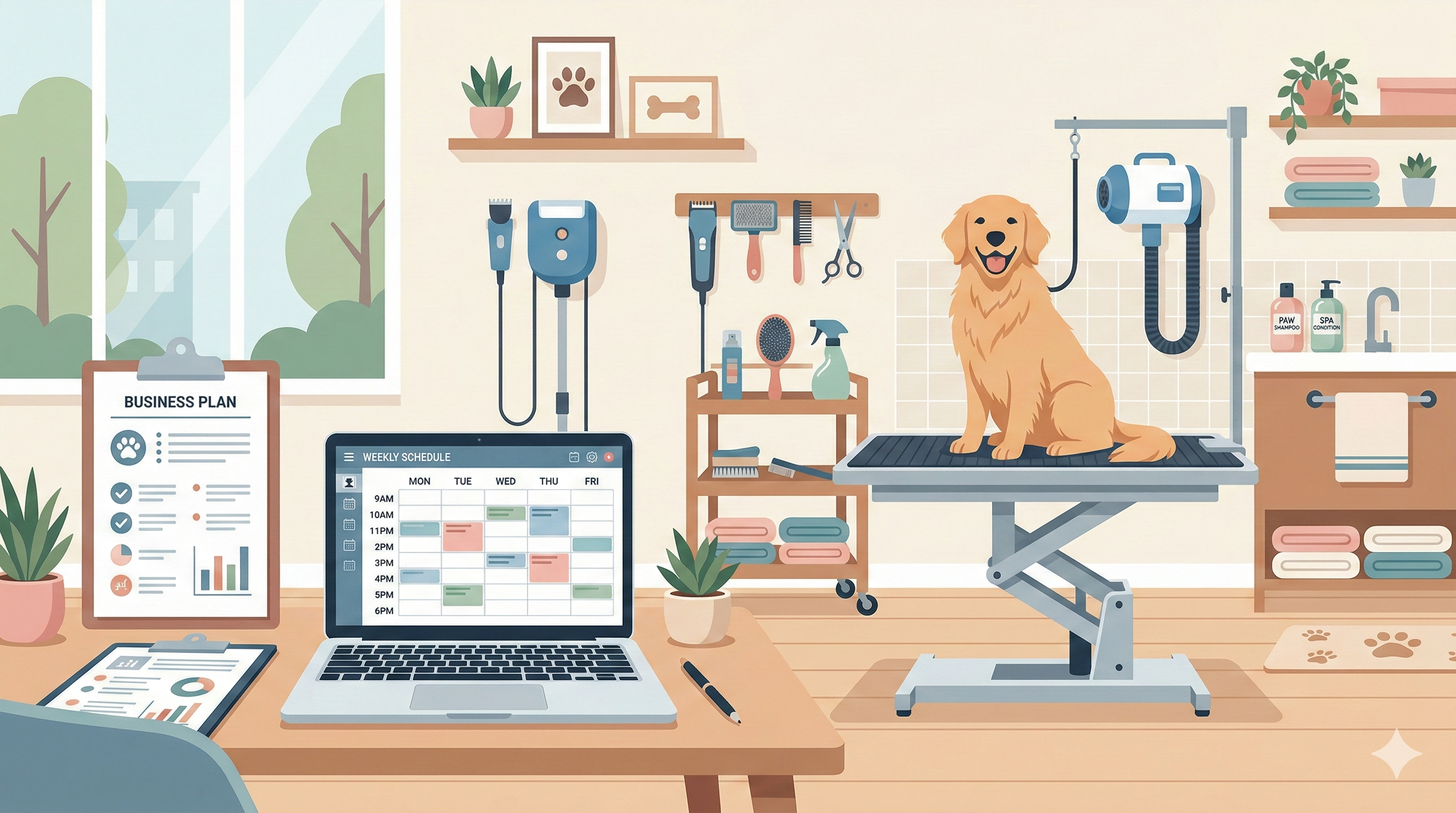
You’ve got the grooming skills. You can take a matted doodle and turn it into something the owner actually wants to photograph. But skills don’t pay rent—a full schedule does.
A pet grooming business plan forces you to answer the questions that separate shops that thrive from shops that close within two years: how you’ll price services, where clients will come from, and what happens when someone no-shows on a $90 appointment. This guide covers everything from choosing your business model and calculating startup costs to building the operational systems that keep your chairs full.
How profitable is a dog grooming business
A pet grooming business plan defines your niche (mobile, home-based, or salon), your target market, your service menu, and what sets you apart from competitors. From there, you layer in startup costs, daily operational procedures, marketing tactics, and financial projections covering at least three years. Profit margins in grooming typically fall between 10% and 50%, though the exact number depends heavily on your pricing, overhead, and how consistently you keep appointments on the books.
Here’s the thing most new groomers miss: profitability has less to do with your scissor skills and more to do with your schedule. One no-show on a $75 groom costs you $75. Five no-shows a week adds up to $1,500 a month in lost revenue. The groomers who stay profitable are the ones who build systems to protect their time, not just the ones who give the best haircuts.
Types of pet grooming businesses
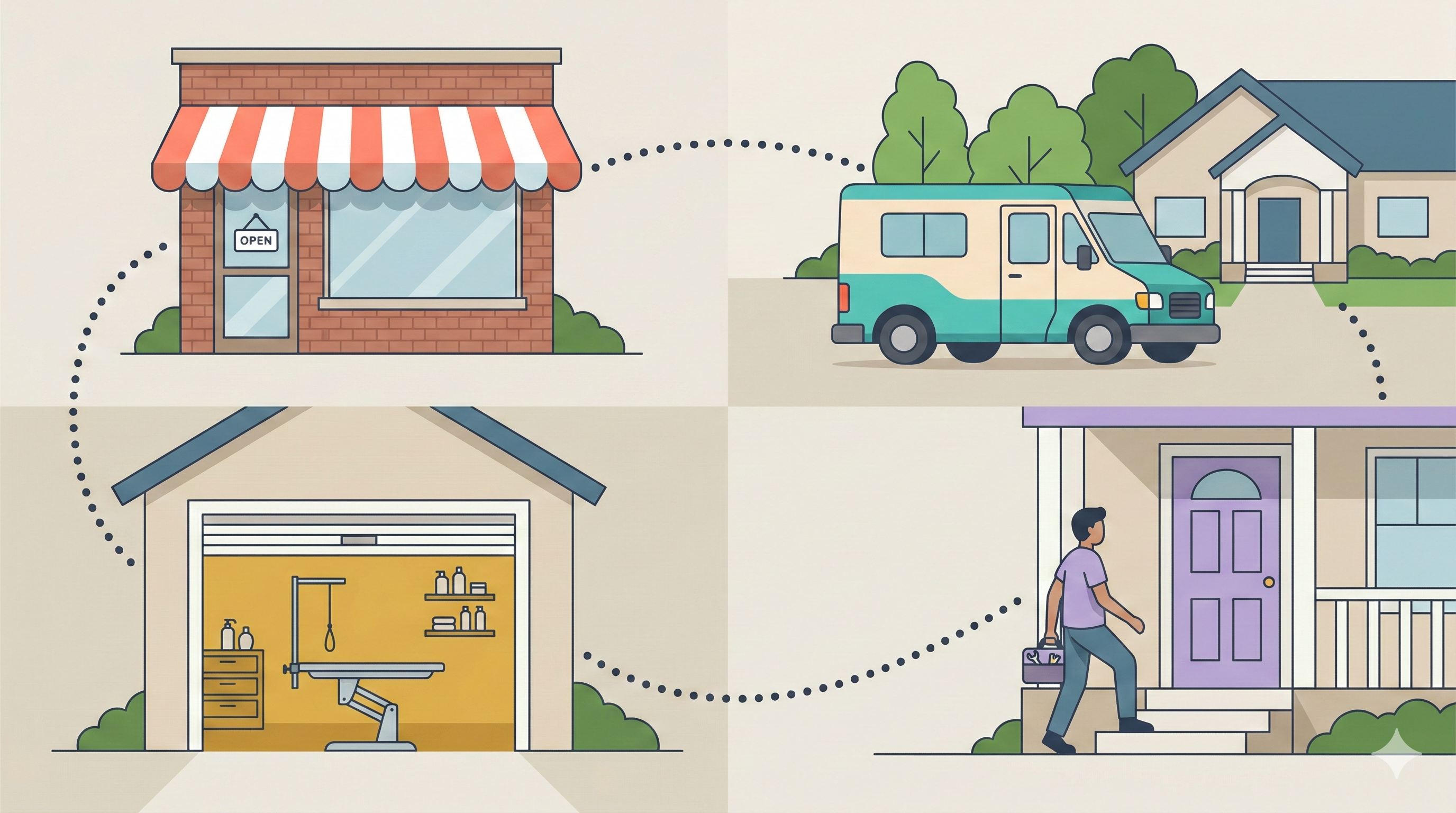
Before you write anything else, pick your business model. Each type comes with different startup costs, licensing requirements, and day-to-day realities.
Mobile dog grooming
You drive to clients in a van or trailer equipped with a tub, dryer, and grooming table. Overhead stays low because you skip rent entirely, but vehicle conversion and maintenance add up. Expect to spend $50,000 to $100,000 on a quality mobile setup. Scheduling gets complicated when you’re routing between neighborhoods, and one late appointment can throw off your entire day.
Home-based grooming
Converting a garage or spare room into a grooming space keeps startup costs minimal, often under $10,000. Zoning laws may restrict this option depending on where you live, and your client volume hits a ceiling fast. This model works well if you want part-time income or a slow ramp into full-time grooming.
Brick-and-mortar grooming salon
A traditional storefront requires the highest upfront investment, anywhere from $50,000 to $150,000 depending on location and build-out. In exchange, you get the most capacity. You can hire multiple groomers, add retail products, and build visibility in your community. More groomers also means coordinating shifts and handoffs, which requires solid staff management tools. The trade-off is fixed overhead that doesn’t care whether your chairs are full or empty.
| Business Type | Startup Cost | Overhead | Client Volume | Flexibility |
|---|---|---|---|---|
| Mobile | $50K–$100K | Low | Limited by route | High |
| Home-Based | Under $10K | Very Low | Limited by space | Medium |
| Brick-and-Mortar | $50K–$150K | High | Highest | Low |
What to include in a dog grooming business plan
Banks, landlords, and potential partners expect specific sections. Skip one, and your plan looks incomplete.
Executive summary
Write this section last but place it first. Summarize your concept, target market, competitive advantage, and funding request in one page. If someone reads nothing else, they understand what you’re building and why it will work.
Company description
Define your legal structure (LLC, sole proprietor, partnership), your physical location or service area, and your mission. Explain what makes your grooming business different from the other shops within a five-mile radius.
Services and pricing menu
List every service you plan to offer and how you’ll price each one:
- Full groom: Bath, haircut, nails, ears, and finishing
- Bath and brush: Maintenance visits without a haircut
- Puppy introduction: Short sessions to acclimate young dogs
- De-shedding treatment: Specialized service for heavy-coated breeds
- Add-ons: Teeth brushing, flea treatments, creative coloring
Market research and competitive analysis
Identify competitors in your area, their pricing, and the gaps they leave open. Maybe no one nearby specializes in cats, or every shop has a two-week wait. 22% of pet owners report concerns about pet service access, including difficulty getting appointments. Gaps like that become your opportunity.
Target market
Define your ideal client. Busy professionals who want convenience? Senior pet parents who value gentle handling? Breed enthusiasts who expect show-quality cuts? Narrowing your focus makes marketing easier and often supports premium pricing.
Marketing strategy
Outline how you’ll attract clients: social media, local SEO, referral programs, partnerships with vets. Keep this section brief since you’ll develop specific tactics later.
Operations plan
Describe how daily operations run. Cover scheduling workflows, appointment management, client communication, and checkout. This section matters more than most new groomers realize. A shop that can’t manage its calendar bleeds money through empty slots and double-bookings.
Financial projections
Include startup costs, monthly expenses, revenue projections, and your break-even timeline. Realistic projections require understanding your capacity (how many dogs you can groom per day) and your average ticket price.
Dog grooming business startup costs
Costs vary dramatically by business type. Here’s what to budget for each model.
Mobile grooming startup costs
Van purchase or conversion runs $40,000 to $80,000. Add grooming equipment, water and power systems, insurance, and initial supplies. Budget $60,000 to $100,000 total, plus ongoing vehicle maintenance.
Home-based grooming startup costs
Equipment, space renovation (tub, drainage, non-slip flooring), licensing, and supplies typically total $5,000 to $15,000. This is the lowest barrier to entry for new groomers.
Brick-and-mortar startup costs
Lease deposits, build-out, plumbing, equipment for multiple stations, signage, and initial inventory push costs to $50,000 to $150,000 depending on your market.
Regardless of which model you choose, plan for spending in five major categories:
- Equipment: Tables, tubs, dryers, clippers
- Space: Lease, build-out, or vehicle conversion
- Licensing: Business permits, certifications, insurance
- Supplies: Shampoos, tools, retail inventory
- Technology: Scheduling software, payment processing
Dog grooming business licenses and legal requirements
Legal requirements vary by state and municipality. Check your local regulations before signing a lease or buying a van.
Business licenses and permits
Most areas require a general business license. Home-based groomers often need a home occupation permit. Some municipalities require kennel licenses even for grooming-only operations.
Grooming certifications
Most states don’t legally require certification to groom dogs, though NJ and NY have pending legislation that would change that. However, credentials from organizations like the National Dog Groomers Association of America (NDGAA) or International Professional Groomers (IPG) build client trust and can justify higher pricing.
Insurance for pet groomers
Liability insurance protects you if a pet is injured or causes damage. Care, custody, and control coverage specifically covers animals in your care. Expect to pay $300 to $600 annually for basic coverage.
Equipment needed to start a grooming business
Grooming tables and bathing stations
Hydraulic or electric tables adjust to comfortable working height and save your back over a long day. Walk-in tubs work well for large dogs, while elevated tubs reduce bending. Grooming arms and loops keep dogs safely in place during the groom.
Clippers, blades, and hand tools
Professional clippers with multiple blade sets handle different coat types. You’ll also want shears (straight, curved, and thinning), combs, brushes, and nail grinders. Budget $500 to $1,500 for quality hand tools.
Dryers and finishing equipment
High-velocity dryers cut drying time dramatically compared to cage dryers. Stand dryers free your hands for brushing. Finishing sprays, ear cleaning supplies, and cologne complete the groom.
Safety and sanitation supplies
Muzzles, grooming loops, first aid kits, disinfectants, blade wash, and proper waste disposal keep your shop safe and compliant with health regulations.
How to price pet grooming services
Underpricing is the fastest path to burnout. Pet services prices are 42% higher than in 2019, and the market supports strong rates. Research competitor pricing in your area first, then set your rates based on your costs, skill level, and the experience you provide.
Several factors affect what you can charge:
- Size: Small, medium, large, extra-large
- Coat type: Smooth, double-coated, curly, matted
- Service level: Bath only, full groom, specialty cuts
- Behavior: Difficult dogs may warrant premium pricing
- Add-ons: De-shedding, teeth brushing, flea treatment
Marketing your dog grooming business
1. Build a local online presence
Claim your Google Business Profile and Yelp listing. When someone searches “dog groomer near me,” you want to appear in the results. Add photos, respond to reviews, and keep your hours updated.
2. Use social media to show your work
Before-and-after photos on Instagram and Facebook demonstrate your skill better than any ad. Pet parents want to see how you handle dogs and the quality of your cuts before they book.
3. Launch a referral program
Incentivize existing clients to bring friends. A $10 discount or free add-on for both parties costs you little but fills your calendar with pre-qualified clients who already trust you.
4. Partner with local pet businesses
Vets, pet stores, trainers, and daycares see your ideal clients daily. Mutual referral arrangements benefit everyone involved.
How to run day-to-day grooming operations
Scheduling and appointment management
A calendar built for grooming workflows blocks time for baths, haircuts, and cleanup separately. Service stacking (booking related services back-to-back) and buffer time between appointments prevent the double-bookings that wreck your day and frustrate clients.
Client and pet records
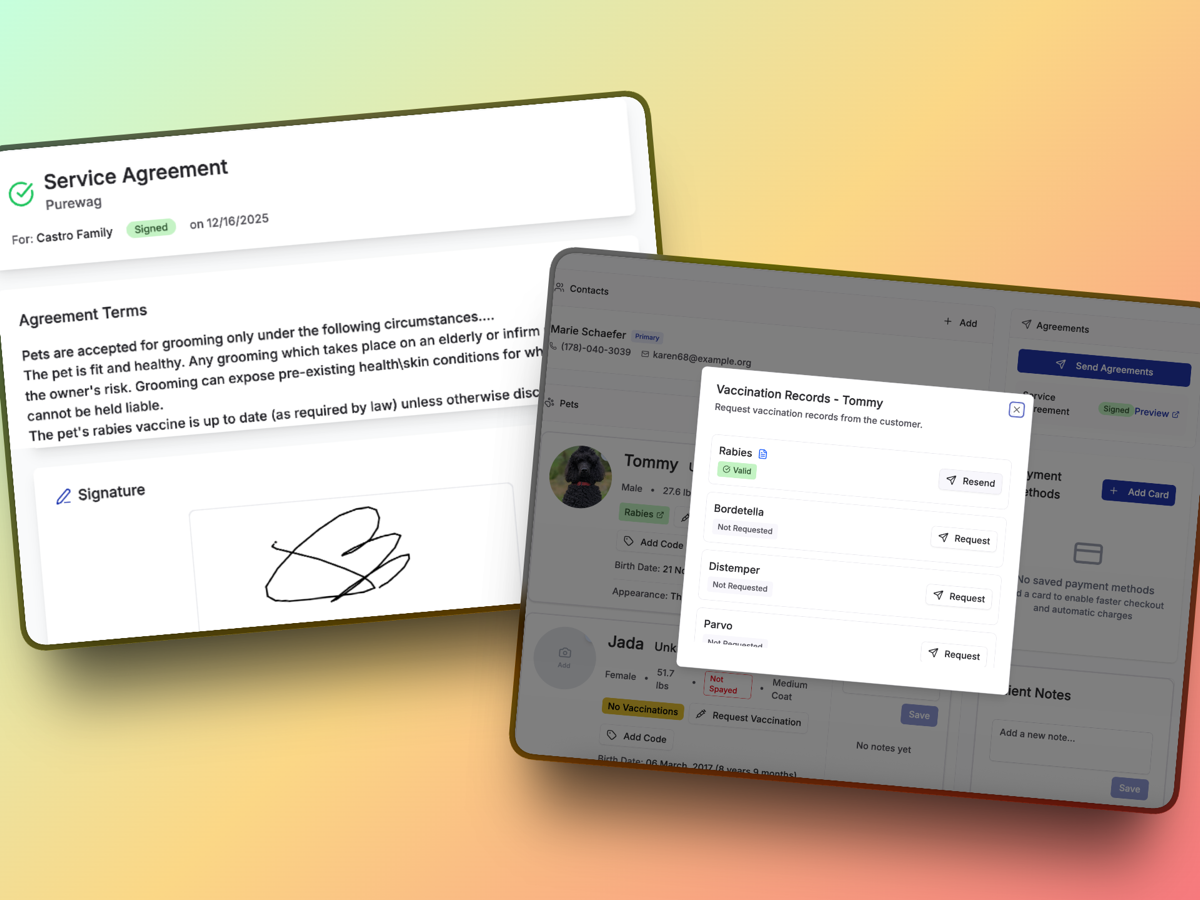
Track pet history, coat notes, behavior flags, allergies, medications, and photos. Good client records let any team member pick up where the last groom left off. No guessing, no surprises, no asking the client the same questions every visit.
Communication and automated reminders
Automated SMS reminders sent 24 hours and 2 hours before appointments dramatically reduce no-shows. Confirmation tracking shows you who’s confirmed and who still hasn’t responded, so you can follow up before the slot goes empty.
Payments and checkout
Checkout shouldn’t become a separate job from the appointment. Integrated payment processing keeps services, tips, and taxes synced without manual reconciliation at the end of the day.
Tip: Purpose-built grooming software like Packyard handles scheduling, reminders, client records, and payments in one system, so you’re not duct-taping generic tools together.
Best practices for running a successful grooming business
1. Define your niche and ideal client
Specialization makes marketing easier and often commands premium pricing. Breed-specific grooming, cat grooming, or working with anxious dogs all represent niches that set you apart. You can’t be everything to everyone.
2. Focus on client experience and rebooking
Profit comes from repeat clients. Rebook at checkout, deliver consistent grooms, and communicate clearly throughout the process. A client who rebooks every six weeks is worth $600 or more annually.
3. Use systems to prevent no-shows
Empty slots cost real money. Deposits, cards on file, confirmation requirements, and automated reminders work together as a system. No single tactic solves the problem on its own.
4. Track the metrics that drive profit
Measure daily revenue, rebooking rate, no-show rate, top clients, and staff utilization. You can’t improve what you don’t track, and you can’t spot problems until you see them in the numbers.
Build your grooming business on systems that actually work
A business plan gets you started. Systems keep you profitable. Most grooming businesses fail not from lack of skill but from operational chaos: missed appointments, scattered client info, and manual scheduling that eats hours every week.
The groomers who thrive build repeatable workflows. Automated reminders protect their schedule. Centralized records eliminate guesswork. Booking systems fill chairs without creating calendar chaos.
Packyard was built by groomers who got tired of losing money to empty slots. It handles scheduling, reminders, client records, and payments in one place, so you can focus on the dogs instead of the admin.
FAQs about starting a pet grooming business
How many dogs can a groomer groom in a day?
Most groomers complete four to eight dogs daily, depending on breed size, coat condition, and service complexity. Efficient scheduling and minimal gaps between appointments push you toward the higher end of that range.
Why do dog grooming businesses fail?
The most common reasons are underpricing services, poor scheduling that leads to empty slots, and burnout from managing everything manually. In other words, systems problems rather than skill problems.
Do I need a formal business plan to get a loan for my grooming business?
Yes. Banks and lenders require a written business plan with financial projections to evaluate your application. Even if you’re self-funding, the planning process clarifies your path to profitability and helps you avoid expensive mistakes.