· How-Tos · 8 min read
The Matted Dog Markup You're Not Charging: How Groomers Lose $5,000/Year to Awkward Conversations
Most groomers absorb de-matting costs to avoid awkward conversations. Here's how to build a system that captures matting fees without damaging client relationships.
The dog’s on your table. You run your hands through the coat and your stomach sinks.
Matted to the skin behind the ears. Pelted on the legs. The entire undercarriage is a solid mass. This “full groom” you quoted at $75 is about to take an extra 45 minutes of careful, blade-destroying work.
The owner is in the lobby. You already said $75. Now you’re facing a choice: have the awkward conversation about additional fees, or absorb the cost and resent every minute of it.
Most groomers absorb it. Every single time.
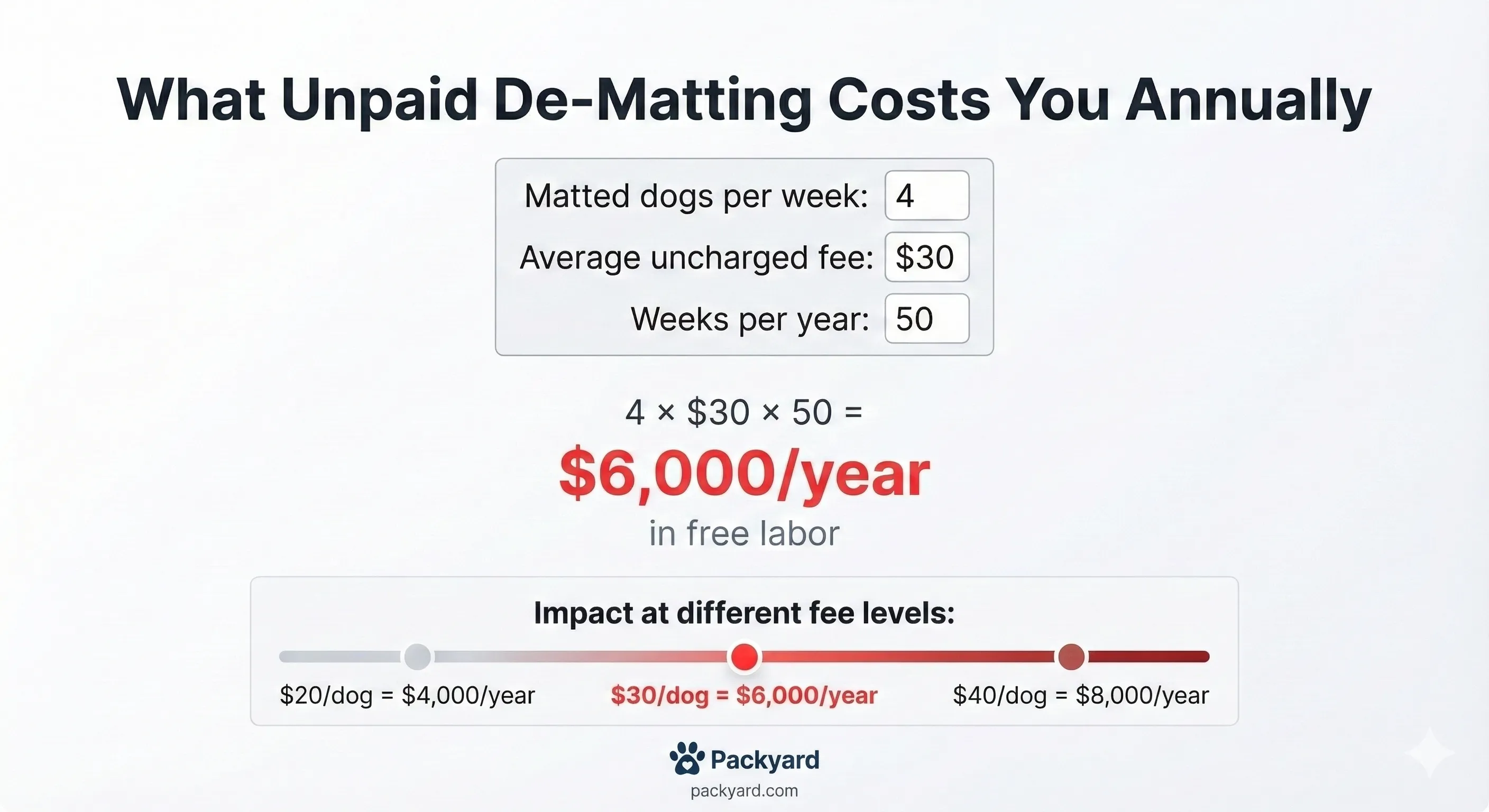
Here’s what that’s actually costing you: 3-4 matted dogs weekly at $25-40 in uncharged labor adds up to $4,000-8,000 annually. That’s not a rounding error. That’s a vacation. That’s new equipment. That’s a month of rent you’re giving away because the conversation feels uncomfortable.
Charging for de-matting isn’t greedy. It’s sustainable. And with the right systems, it doesn’t have to be awkward.
The True Cost of Unpaid De-Matting
The math is worse than most groomers realize.
Light matting—minor tangles requiring a thorough brush-out—adds 15-20 minutes. That’s $15-20 of labor you’re probably not charging.
Moderate matting—sections matted to the skin requiring careful clipper work—adds 30-40 minutes. That’s $25-35 you’re absorbing.
Severe matting—coats matted solid requiring full shave-downs—adds 45-60 minutes of slow, careful work. That’s $40-60 in uncharged time, plus accelerated blade wear, plus physical strain on your hands and shoulders.
At just 3-4 matted dogs per week, you’re giving away $75-160 weekly. Over a year: $3,900-8,300 in free labor.
But the cost isn’t just money. Forty-five extra minutes on one dog cascades through your entire day. The next appointment runs late. Lunch disappears. You stay an hour past closing to finish. One matted dog doesn’t just steal your revenue—it steals your schedule and your sanity.
There’s also the pricing paradox nobody talks about. Client A brushes their dog religiously, arrives with a well-maintained coat, and pays $75. Client B neglects their dog for three months, arrives with a matted mess, and pays… $75. Same price, double the work. You’re effectively punishing prepared clients by subsidizing neglect. **
Why Groomers Don’t Charge (And Why Those Reasons Don’t Hold Up)
Every groomer has a reason for absorbing matting costs. None of them survive scrutiny.
“I already quoted them.”
You quoted based on expected condition. A quote isn’t a binding contract—it’s an estimate based on expected condition. Mechanics adjust quotes when they open the hood and find more damage. Contractors adjust when they open a wall and find rot. Every trade adjusts pricing when scope changes. You’re allowed to do the same.
“They’ll leave a bad review.”
Clear communication prevents bad reviews, not free labor. Clients who understand why there’s an additional fee accept it. Clients who leave over fair, explained charges were never your ideal clients anyway. What actually causes bad reviews is silent resentment leaking into your service quality.
“It’s easier to just do it.”
Easier in the moment. Harder on your business, your body, and your calendar. Every absorbed cost is a conscious decision to work for free. “Easier” today compounds into burnout tomorrow. Systems make charging just as easy as absorbing—easier, actually.
“I feel bad—they didn’t know.”
They didn’t know because they didn’t brush their dog. That’s their choice, not your responsibility. You can educate them generously while still charging fairly. Feeling bad doesn’t cover your rent. Compassion doesn’t require bankruptcy.
“What if they can’t afford it?”
Offer options. A shave-down at regular price versus de-matting at additional cost. Let them choose based on their budget. Their financial constraints aren’t your pricing decision. You can be flexible without being free.
Every reason for not charging is emotional. The math doesn’t support any of them.
Building a Matted Dog System
The good news: charging for de-matting doesn’t require confrontation. It requires systems.
Step 1: Assessment Before Quoting
Never finalize a price without seeing the coat. For phone quotes: “Full grooms start at $75—final price depends on coat condition, which I’ll confirm at drop-off.”
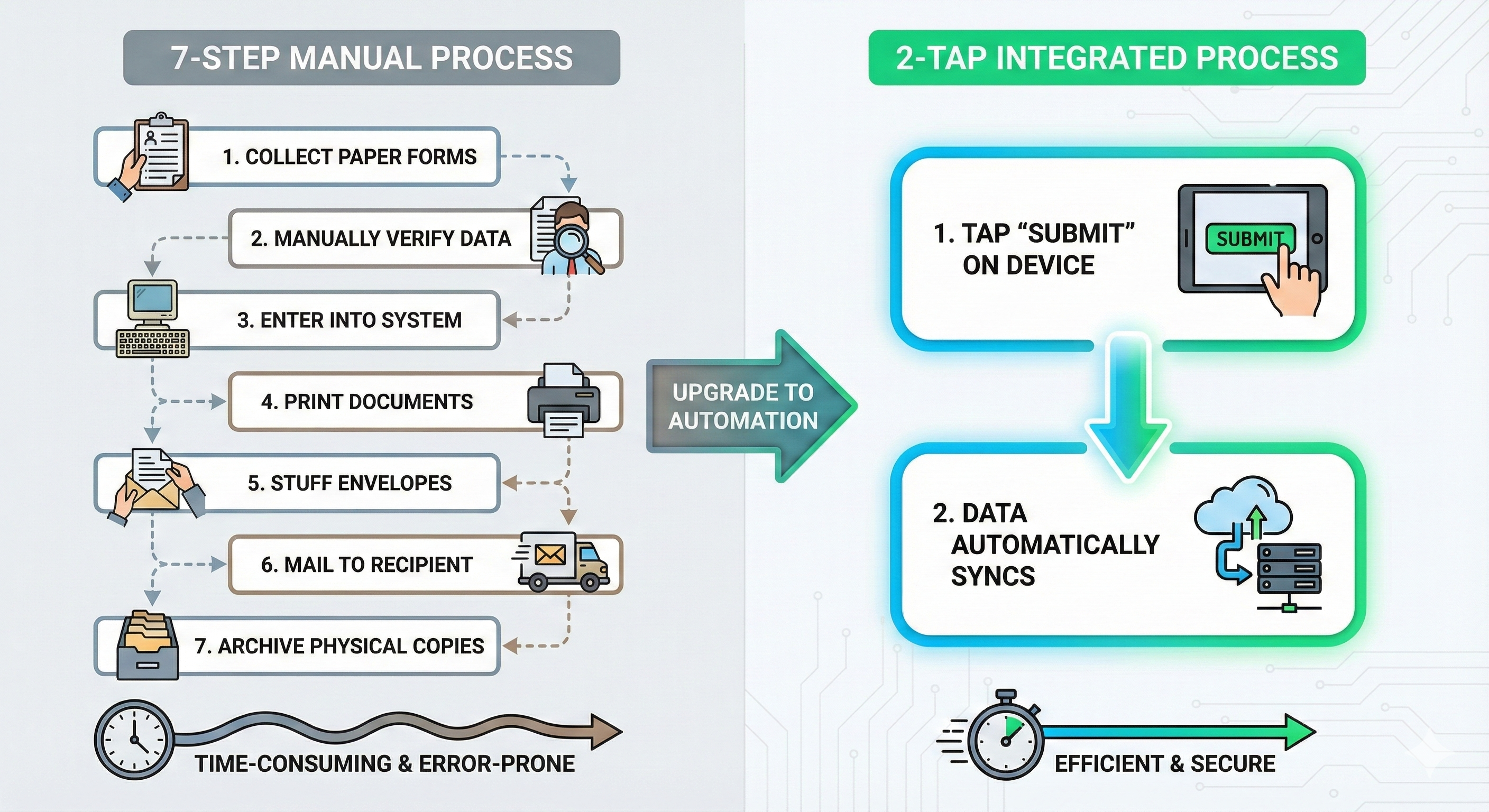
At check-in, before the owner leaves, run a 60-second assessment. Hands through the coat: neck, chest, legs, undercarriage, behind ears. Identify matting level while the owner is still present. No surprises after they’ve left. This assessment step integrates seamlessly with efficient checkout workflows where service details and fees flow automatically to payment.
Step 2: Tiered Matting Fees
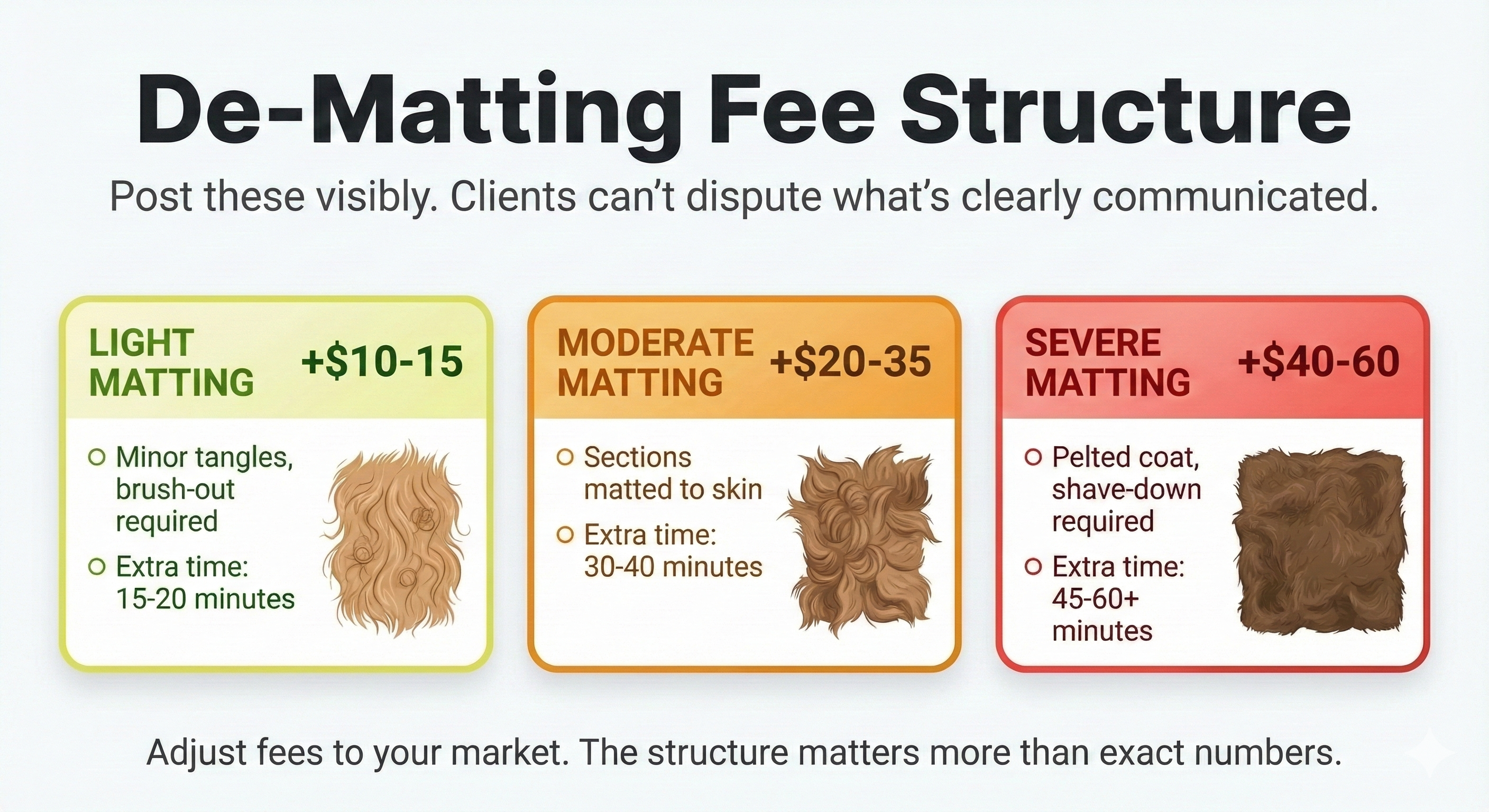
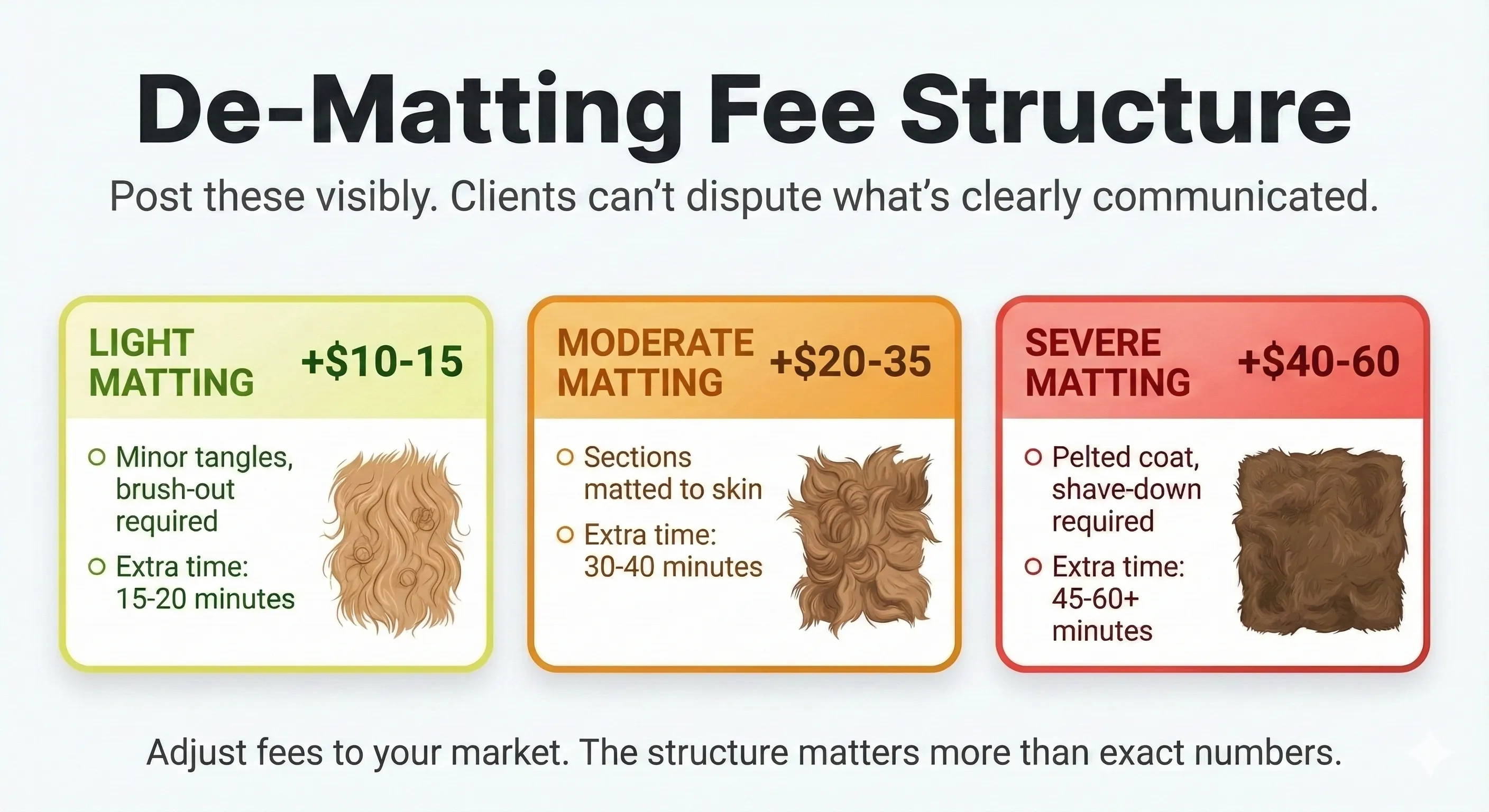
Standardize and post your fees visibly—website, booking confirmation, salon wall.
Light matting (minor tangles, 15-20 extra minutes): +$10-15 Moderate matting (sections matted to skin, 30-40 extra minutes): +$20-35 Severe matting (shave-down required, 45-60+ extra minutes): +$40-60
Visibility prevents surprise. Surprises cause conflict. When fees are posted, clients can’t claim they didn’t know.
Step 3: Photo Documentation
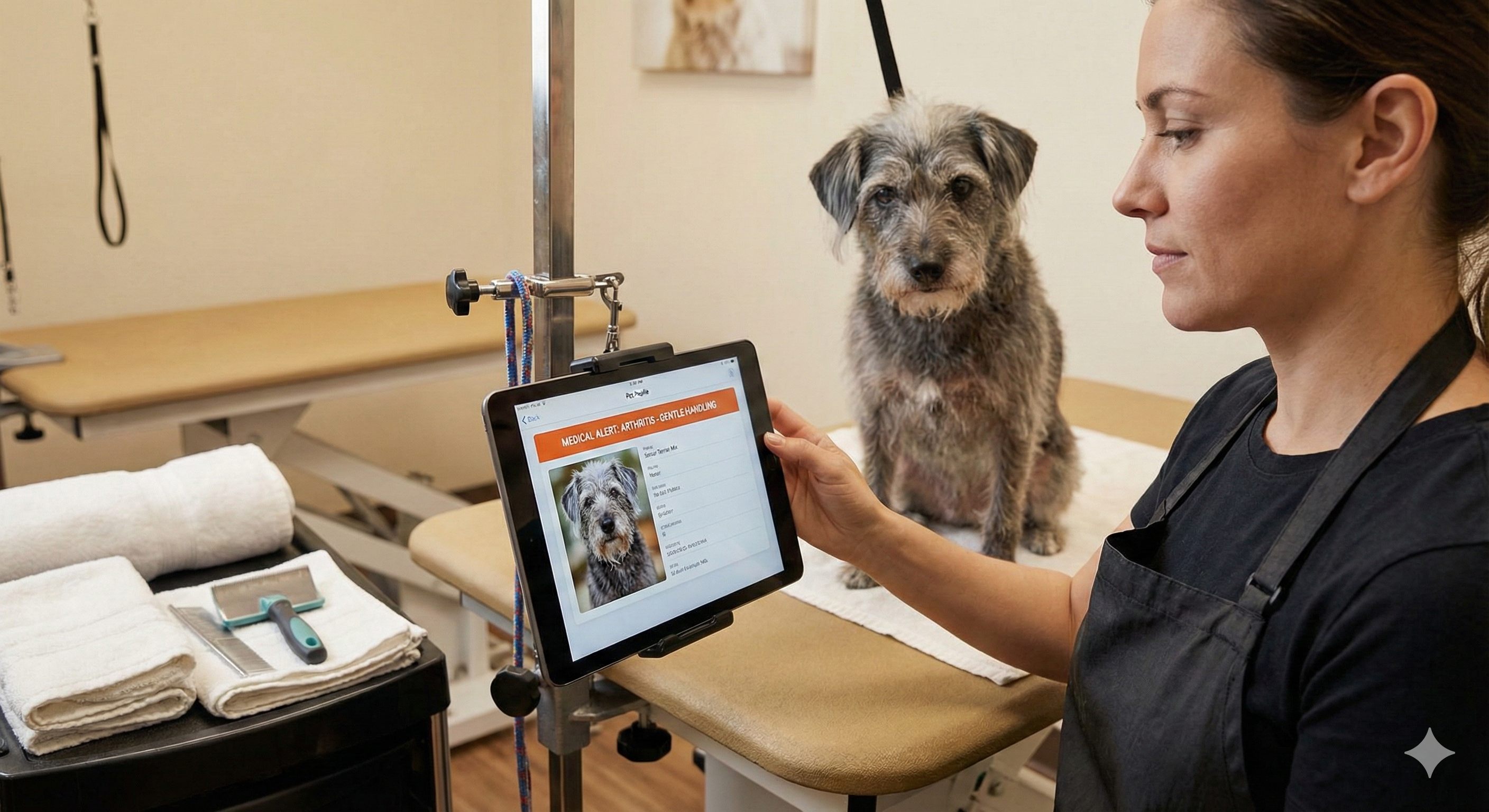
Before you start de-matting, take a 10-second photo showing the coat condition. Attach it to the client record.
At checkout: “Here’s what we were working with today.” Visual evidence eliminates disputes. It also educates—owners often don’t realize how bad the matting actually is until they see it.
For mobile groomers, this is especially critical. You’re working in the client’s driveway without witnesses. Photos protect you. Photo documentation and client management systems help you maintain visual records that support fee conversations.
Step 4: Signed Acknowledgment
Digital agreement before you start: “De-matting required due to coat condition. Additional fee of $X applies. Alternatively, a humanitarian shave-down (removing all mats with a full clip) is available at standard pricing.”
Client sees the options. Client signs. Client owns the decision.
No signature, no surprises, no “I didn’t know” disputes at checkout. Like no-show fees, matting fees require card-on-file and clear communication upfront—not awkward collections after the fact.
Step 5: Offer the Alternative
Some clients genuinely can’t afford the extra fee. Don’t refuse service—offer choices.
“I can remove the mats with a full clip-down at the regular price, or I can carefully de-mat and preserve the length for an additional $30. Which works better for you?”
You’re not the bad guy delivering bad news. You’re a professional offering options. The client decides. You execute. **
Scripts That Make It Easy
The right words make the conversation feel professional, not confrontational.
At Check-In:
“Let me take a quick look at Bailey’s coat before you head out…”
[60-second assessment]
“I’m finding some matting behind the ears and on the legs. De-matting will add about 30 minutes and $25 to today’s service. I can also do a shorter clip that removes the mats at the regular price. Which would you prefer?”
When Discovered After Drop-Off:
“Hi Sarah, I’ve started working on Bailey and found more matting than expected, especially on the legs and chest. I took a photo I can show you at pickup. De-matting will add $30 to today’s service. I wanted to check with you before proceeding—I can also do a full clip-down at the regular price if you’d prefer. What works best?”
At Checkout:
“Bailey looks great! I did spend extra time on the matting around the legs—here’s what we were working with. The de-matting added $25 to today’s total. For next time, brushing the legs and behind the ears twice a week will help prevent this buildup.”
When They Push Back:
“I understand—matting happens gradually and it’s hard to notice at home. We charge for de-matting because it requires specialized technique and significantly more time. Clients who brush between visits pay the standard rate every time. I’m happy to show you some techniques to prevent this for next visit.”
Notice what these scripts do: explain the why, offer alternatives, reference documentation, and educate for next time. No apologies. No defensiveness. Just professional communication.
What to Look for in Your Systems
Consistent fee capture requires tools that support the process:
☐ Check-in assessment prompts with coat condition fields that surface at drop-off
☐ Photo attachment to pet profiles for visual documentation
☐ Digital agreement templates for de-matting acknowledgment before service
☐ Tiered add-on pricing that flows automatically to checkout
☐ Client communication tools for mid-appointment fee approval when needed
☐ Service notes that persist and surface at future appointments
☐ Integrated payments via Square so add-on fees flow directly to checkout without manual entry
☐ Vetted software listed in Square’s App Marketplace for payment compliance
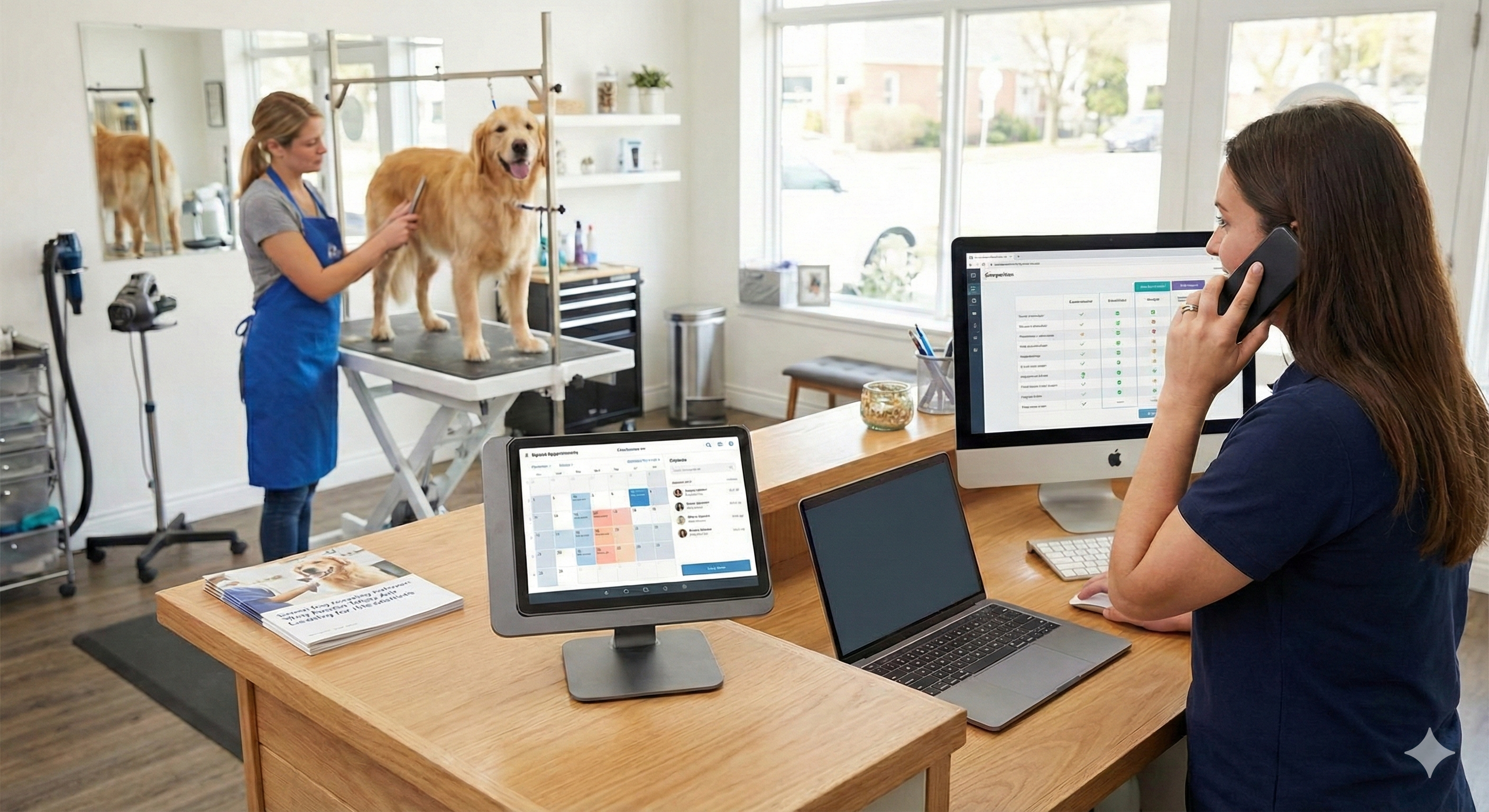
The integration matters. If assessment notes live in one app, photos in your camera roll, agreements on paper, and pricing in your head, the system breaks. Everything needs to flow together. Learn more about why native Square integration matters for grooming software.
Take the Next Step
Charging for de-matting isn’t awkward when you have systems. Assessment at check-in. Clear fees posted visibly. Photo documentation. Signed acknowledgment. Options offered professionally.
The $5,000+ you’re currently giving away? That’s yours to keep.
See how integrated payment systems with digital agreements and photo documentation make fee collection automatic and professional, or explore complete grooming salon software that handles check-in assessments, digital waivers, and checkout fee capture in one seamless workflow.
Start your free trial today and stop giving away matting fees.